
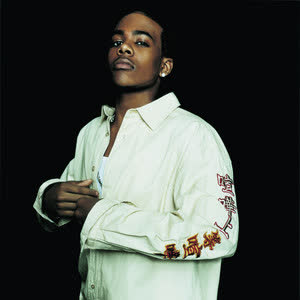
Mario's Let Me Love You is one of those rare songs that feels just as powerful the first time you hear it as it does on the hundredth replay. Released in 2004, the track became more than a chart hit. It became a cultural touchstone, a go-to song for anyone who has ever wanted to show someone that love can be gentle, patient, and healing. Decades after its release, listeners across Africa, the Americas, and beyond are still turning to this song when words of their own fall short. Whether you are discovering it for the first time or returning to it after years away, Let Me Love You offers something real every single time.
The Story Behind Mario and His Rise to Stardom
Mario Dewar Barrett was born on August 27, 1986, in Baltimore, Maryland. He grew up in difficult circumstances, with a mother who struggled with addiction, and music became both an escape and a lifeline for him. He began performing at a young age and signed his first record deal while still in his early teens, releasing his self-titled debut album in 2002 when he was just fifteen years old.
What made Mario stand out from the crowded R&B landscape of the early 2000s was the authenticity in his voice. He was not singing about love from a place of theory. He was channeling real emotional experience, real longing, and real sensitivity into every note. His smooth tenor voice carried a maturity that surprised listeners who saw how young he was. Artists like Usher and Ginuwine had already shaped the sound of male R&B, and Mario absorbed those influences while developing something distinctly his own.
His sophomore album Turning Point, released in 2004, was the record that changed everything. It was the album that introduced the world to Let Me Love You, and it proved that Mario was not a one-hit act or a teenage novelty. He was a genuine artist with something meaningful to say.
What Makes Let Me Love You a Classic
Let Me Love You was written and produced by Scott Storch and J.R. Rotem, two of the most in-demand producers of that era. The production is built on a slow, swaying mid-tempo groove that feels both modern and timeless. Smooth string arrangements give the track warmth without ever becoming overproduced. There is space in the music, and that space is where Mario's voice does its most important work.
The lyrics tell a story that millions of people recognize immediately. The narrator is speaking to someone who has been hurt in a previous relationship, someone who has learned to guard their heart because the last person they trusted did not treat them well. Rather than becoming impatient or pushing too hard, the narrator makes a simple, sincere promise: let me show you what real love looks like. Let me be the one who does it right.
This emotional premise is one of the reasons the song has never aged. Heartbreak and healing are not experiences that belong to a specific decade. Every generation produces people who have been hurt and people who want to do better. Let Me Love You speaks directly to both of those people at once, and it does so without ever feeling preachy or dramatic. The tone is warm, not desperate. Confident, not aggressive.
The hook is one of the most recognizable melodies in R&B history. It is the kind of melody that sticks immediately, that people hum without realizing they are doing it, and that brings an emotional response even when heard faintly through a phone speaker or a passing car. That is the mark of genuinely great songwriting.
How the Song Performed Commercially
Let Me Love You debuted at number one on the Billboard Hot 100 in November 2004 and spent nine consecutive weeks at the top of the chart. That kind of sustained dominance is rare in any era of popular music. The single sold millions of copies worldwide and earned Mario a Grammy Award for Best Male R&B Vocal Performance in 2005. It remains one of the best-performing R&B singles in the history of the Billboard chart.
The Song's Legacy in African Music Culture
Across sub-Saharan Africa, Let Me Love You found a deeply appreciative audience that has never let it go. In countries like Tanzania, Uganda, Botswana, Kenya, and Nigeria, the song became a standard at weddings, school dances, and late-night radio. African listeners connected with the song's emotional honesty in the same way that listeners everywhere did, but the song also arrived at a moment when American R&B was deeply influential in shaping urban African music culture. Artists across the continent grew up listening to Mario, and his influence can be heard in the smooth vocal styles of countless Afrobeats and Bongo Flava artists who came after him.
Why This Song Still Resonates in 2026
Great music survives because it speaks to permanent human experiences. Let Me Love You is about love, yes, but more specifically it is about the courage it takes to be vulnerable after you have been disappointed. It is about patience. It is about choosing to believe that not everyone will hurt you the same way.
In 2026, those themes are no less relevant than they were in 2004. If anything, a generation that has grown up navigating relationships through social media, where connection can feel both constant and shallow, finds something unusually grounding in a song this sincere. There is no performance in Mario's delivery. There is no irony or detachment. He means every word, and listeners feel that.
The song also benefits from its production aging gracefully. Unlike some tracks from that era that sound immediately dated because of their reliance on specific electronic trends, Let Me Love You was built on organic instrumentation and traditional song structure. It sounds like a record that could have been made in almost any decade, which is exactly why it continues to fill dancefloors and soundsystem sets in 2026.
Tips for Listeners Who Want to Explore More of Mario's Music
If Let Me Love You is your introduction to Mario's catalogue, there is a great deal more to discover. Here are a few practical starting points.
Begin with the Turning Point album in full. The tracks surrounding Let Me Love You are equally strong, and hearing the song in context gives you a better sense of Mario as an artist rather than just a hit-maker.
From there, move to his 2007 album Go. That record shows a more mature Mario experimenting with different sounds while keeping the emotional core of his music intact. The single How Do I Breathe is widely considered one of his finest vocal performances.
Pay attention to his live performances and television appearances from 2004 and 2005. Mario is an exceptional live singer, and watching him perform Let Me Love You with a full band reveals just how much vocal skill sits beneath the polished studio recording.
If you enjoy R&B from this era, use Mario as a gateway into related artists. Keith Sweat, Joe, and Ne-Yo all share something of Mario's commitment to emotional directness and melodic craft. Exploring their catalogues alongside Mario's will give you a rich picture of what American R&B sounded like at its early 2000s peak.
Frequently Asked Questions About Let Me Love You
Who produced Let Me Love You by Mario? The song was produced by Scott Storch and J.R. Rotem and was released in 2004 as the lead single from Mario's Turning Point album.
Did Let Me Love You win any awards? Yes. Mario won the Grammy Award for Best Male R&B Vocal Performance in 2005 for this song.
How long did Let Me Love You stay at number one? The single spent nine consecutive weeks at number one on the Billboard Hot 100, making it one of the longest-running number one R&B singles of the decade.
Is Mario still making music? Yes. Mario has continued recording and performing well into the 2020s, releasing new material and maintaining a presence on streaming platforms and social media.
Why is the song so popular in Africa? The emotional themes of the song are universally relatable, and Mario's music arrived at a time when American R&B was deeply influential on African urban music culture. The song became embedded in the musical memory of a generation of listeners across the continent.
Final Thoughts
Let Me Love You is the kind of song that earns its place in music history not through novelty or spectacle but through sincerity and craft. Mario brought genuine feeling to every second of the track, and Scott Storch's production gave that feeling the perfect home. The result is a record that has outlasted trends, crossed cultural boundaries, and continued to mean something new to each generation of listeners who finds it.
Whether you are hearing this song for the first time today or returning to it after years away, take a moment to really listen. Listen to the space in the production, the warmth in Mario's voice, the simplicity of the promise being made. There are very few songs that capture the feeling of careful, hopeful love this well, and that is why this one has never stopped mattering.
For more coverage of timeless R&B classics, African music, and the stories behind the songs that define generations, explore the related posts

Leave a Reply